


Questions & Common Misconceptions
Is Organic Farmed Salmon Better?
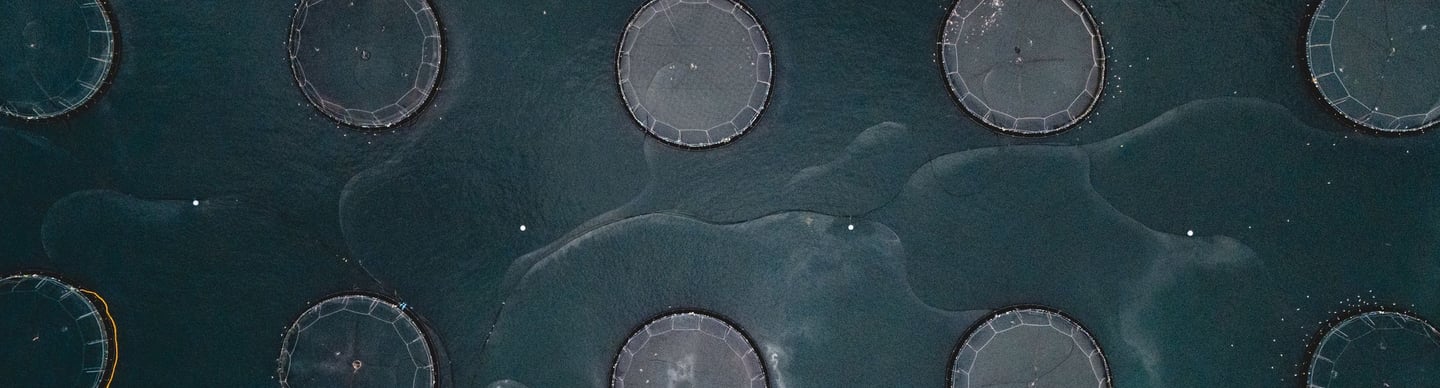
Salmon labelled Bio AB or Label Rouge may actually contain even more PCBs (persistent pollutants), due to its diet rich in wild fish that have themselves accumulated toxic substances in their natural marine environment. Label Rouge certification in fact requires 51% ingredients of marine origin, meaning the bioaccumulation effect is even greater.
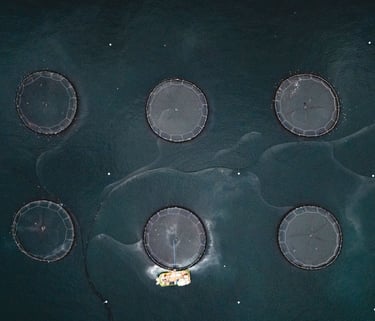
In addition, organic farms also use various chemical treatments to combat the diseases and parasites that affect salmons. Among the insecticides that are toxic to aquatic life, deltamethrin is still widely used in both conventional and organic farming. It causes high mortality rates in shrimps and is highly toxic to lobsters within a radius of up to 39 km² around the farm.
How-To Eat fish Without Contributing to the Destruction of Marine Ecosystems?
If the ethical question of animal suffering does not factor into your consumption choices, you should:
drastically reduce your consumption;
avoid carnivorous fish (sea bass, trout, salmons)
in farming, the feed given to these top-of-the-food-chain fish plays a major role in overfishing (fishmeal) and deforestation (plant proteins, mainly soy). Fishmeal fishing (intended to feed farmed animals) also undermines the food security of coastal communities who depend on these "resources" for their livelihoods (particularly in West Africa);
in wild fishing, these fish play a crucial role in the balance and regulation of marine ecosystems. Avoid destructive fishing methods (non-selective methods such as trawling, gill nets or demersal seine nets). You may opt for low-impact aquaculture products (seaweed, shellfish), fish substitutes produced in France that are rich in protein, fibre and Omega-3 (such as the plant-based salmon from OceanKiss), or small fish from coastal line fishing (though this choice still contributes to animal suffering). Fishing methods are required by law to be indicated on labels. However, at Seastemik, our approach is holistic and also takes into account social, animal welfare and human health impacts.
Today, the choice to continue eating fish in France cannot ignore the following facts.
Human health: fish consumption in France meets no nutritional necessity, despite high fish consumption (30.4 kg/person/year), 89% to 99% of the French population shows Omega-3 deficiencies. The French College of General Medicine recommends a 90% plant-based diet. Fish consumption is one of the greatest sources of exposure to persistent pollutants.
Animal suffering: fish are sentient living beings whose slaughter, regardless of the fishing method used, causes suffering.
Social justice: the most selective fishing method is coastal line fishing, while it is less destructive to marine ecosystems, production volumes are limited and sale prices are higher, which does not meet the imperative of equitable and accessible food for all.
Salmons and Omega-3: What's the Real Story?
While salmons are known to contain Omega-3, two crucial facts are missing from this picture.
France is the largest salmon consumer in Europe and the fourth largest in the world. Yet, depending on the type of Omega-3 (DHA/EPA or ALA), 89% to 99% of the French population shows Omega-3 deficiencies. Despite high salmon consumption in France, the nutritional needs of the vast majority of the population are therefore not being met.
Salmon is one of the species whose flesh is most heavily contaminated by persistent pollutants (such as PCBs and PFAS) and microplastics, due in particular to its high fat content. Salmons absorb these pollutants from their environment and diet: these substances are carcinogenic, neurotoxic and can cause immune and reproductive system disorders.
Alternatives do exist: Linseed oil is the number one food source of Omega-3 and is readily available in supermarkets and health food shops. In second place, rapeseed oil is a familiar product and more affordable. Consuming 1 teaspoon per day of either oil provides 100% of the daily recommended intake of ALA Omega-3. The OceanKiss brand smoked salmon alternative, produced in France, is rich in Omega-3 and contains no toxic elements (PCBs, PFAS, microplastics).
Discover our dietary choices table for detailed comparisons (cost, nutritional content, toxic elements...) at www.pinkbombs.org.
Does Fish Farming Help Contribute to Global Food Security?
Farming carnivorous fish, such as salmons, consumes more resources than it produces. As a reminder, up to 440 wild fish must be caught to feed and raise a single farmed salmon. Rather than guaranteeing global food security, this practice contributes to widening inequalities in access to food.
For its salmon farms, Norway catches or imports 2 million tonnes of wild fish per year, including 123,000 to 144,000 tonnes from West African waters. This volume could meet the annual nutritional needs of 2.5 to 4 million people in the region. This practice therefore disregards local nutritional needs, where pelagic fish are a vital protein source for countries such as Senegal, Gambia and Mauritania, providing up to 65% of their animal protein requirements.
Fish farming: A Solution to Reduce Ecological Pressure on the Ocean?
Contrary to popular belief, farming carnivorous fish contributes significantly to the decline of marine biodiversity. The blind spot of overfishing is to blame: fishmeal fishing. This is an industrial fishing practice that involves catching small pelagic fish to produce meal and oil, used to feed farmed animals, including carnivorous fish such as salmons. As a reminder, up to 440 wild fish must be caught to feed and raise a single farmed salmon. The overfishing of these species also contributes to the bycatch of predator species (approximately 300,000 dolphins and small whales, 250,000 turtles and 300,000 seabirds are killed each year).
These ecological imbalances extend as far as Antarctica, where krill (a tiny crustacean) is fished partly to colour the flesh of farmed salmons (6.5 tonnes of krill are required to produce 1 tonne of krill meal). In addition, there is damage to local biodiversity around marine cages (waste discharge, eutrophication, pesticides, antibiotics...). For example, the nutrient discharge from Norwegian marine salmon farms is equivalent to the sewage produced by approximately 10 million people. To find out more, read our report: Salmons: the pink bomb of a food system at breaking point.
Insect-based Feed for Salmon: A Real Solution?
To answer this question, we collaborated with the National Observatory of Insect Farming (ONEI), an organisation that disseminates scientific knowledge on the challenges and prospects of this sector.
First, the industry shifted to plant-based salmon feed, using vegetable meal, particularly soy-based. While this reduced the marine-origin ingredient content, it transferred the environmental impacts from marine to terrestrial ecosystems through deforestation of the Amazon rainforest. Furthermore, salmons are carnivorous and cannot consume less than 20% animal protein. Shifting their diet towards plants poses risks to their proper development, particularly neurologically.
The other option being considered is insect meal: however, a comprehensive 2022 systematic review (Quang Tran et al. 2022), the most complete to date, indicates that, with the exception of reduced pressure on forage fish, insect meal has higher environmental impacts than fishmeal. Insects have a "massive impact" on climate, energy consumption and water use. These effects are primarily due to the production of insect feed and the maintenance of the infrastructure required for rearing these animals, often kept at 30°C for optimal growth.
Furthermore, insect meal contributes significantly to water acidification and eutrophication through nutrient pollution. The only potential advantages lie in reducing pressure on forage fish (compared to fishmeal) and reduced land use (compared to soy meal).
Researchers have also raised concerns about biodiversity impacts in the event of accidental escape of farmed insects into the wild, especially if they are genetically modified or selectively bred. These insects could compete with local species or cause genetic "pollution".
Finally, insect meal is unlikely to reduce overfishing as long as its price remains higher than conventional ingredients.
What Are the Conditions Like on Salmon Farms?
Salmon farming in marine cages mirrors the model of intensive chicken and pig farming, but at sea: extreme concentration of production in a very small space, heavy use of antibiotics, vaccines and chemical treatments (pesticides to manage sea lice), genetic modification, genetic manipulation and selection, mechanisation, salmon growth acceleration techniques, feed additives, and so on.
The extreme densities in cages cause stress, suffering and episodes of mass mortality: in Norway alone in 2023, 100 million farmed salmons died, the highest mortality rate ever recorded. Globally, the leading cause of mortality is sea lice: a parasite that, once attached to salmons, feeds on the fish's mucus, skin and tissue, reducing their immune capacity.
Carbon Footprint: Is It Better to Eat Local or Plant-Based?
Contrary to common belief, a locally sourced diet that continues to include meat and fish has a higher carbon footprint than a plant-based diet, even when the latter involves more imports. According to the IPCC, a vegan diet has the greatest potential for greenhouse gas reduction, followed by a predominantly plant-based diet, meaning meat or fish consumed no more than once a month. Why does a 100% local but meat-and-fish-based diet have a higher carbon footprint than a non-local plant-based diet? Because farmed animals, even if raised locally, require large quantities of imported feed (soy crops, fishmeal fishing). For example, in farmed salmon production, feed production is the primary source of greenhouse gas emissions (79.6%).
Deforestation: Tofu vs Salmon
Only 20% of the world's soy is destined for direct human consumption, while 76% goes to feeding farmed animals.
To reduce the use of wild fish in farmed salmon feed, the industry has replaced a large proportion of fishmeal with soy protein. As a result, for a 100g salmon fillet, 95g of soy had to be used in 2020, making salmon the second largest consumer of soy after chicken.
This substitution ties the aquaculture industry closely to Brazilian soy production. Yet the expansion of soy crops destined for livestock is responsible for massive deforestation in the Amazon, CO2 emissions and the seizure of indigenous lands. The Amazon, once a carbon sink, now produces more CO2 than it absorbs.
Why Is Farmed Salmon Pink?
Colouring is added to farmed salmon feed to make their flesh more or less pink: sometimes this colouring is artificial. Often, it comes from krill, a small crustacean fished in Antarctica. Krill contains a natural pigment, astaxanthin. On average, around 6.5 tonnes of krill are required to produce one tonne of krill meal.
Yet Antarctic krill is the cornerstone of the Antarctic ecosystem. It plays a crucial role in the food chain, serving as essential food for many animals such as whales, seals and squid, krill accounts for 96% of the caloric needs of seabirds and marine mammals. It also plays a role in regulating and storing atmospheric carbon, through its faeces and moults, by which it sequesters carbon and exports it to the ocean floor. In a context of climate emergency, continuing to fish Antarctic krill at the expense of the indispensable ecosystem services it provides actively contributes to biodiversity decline and global warming, the consequences of which deepen social inequalities.